Embroidered patches →
Textured logos for jackets, uniforms, caps and bags.
Review before sampling: Stitch coverage, smallest lettering, base fabric and border shape.
Compare embroidery and woven patch construction → Request a Quote
MANUFACTURING CAPABILITIES
We help align patch construction with artwork, garment, attachment method and end use before production starts.
Discuss your project →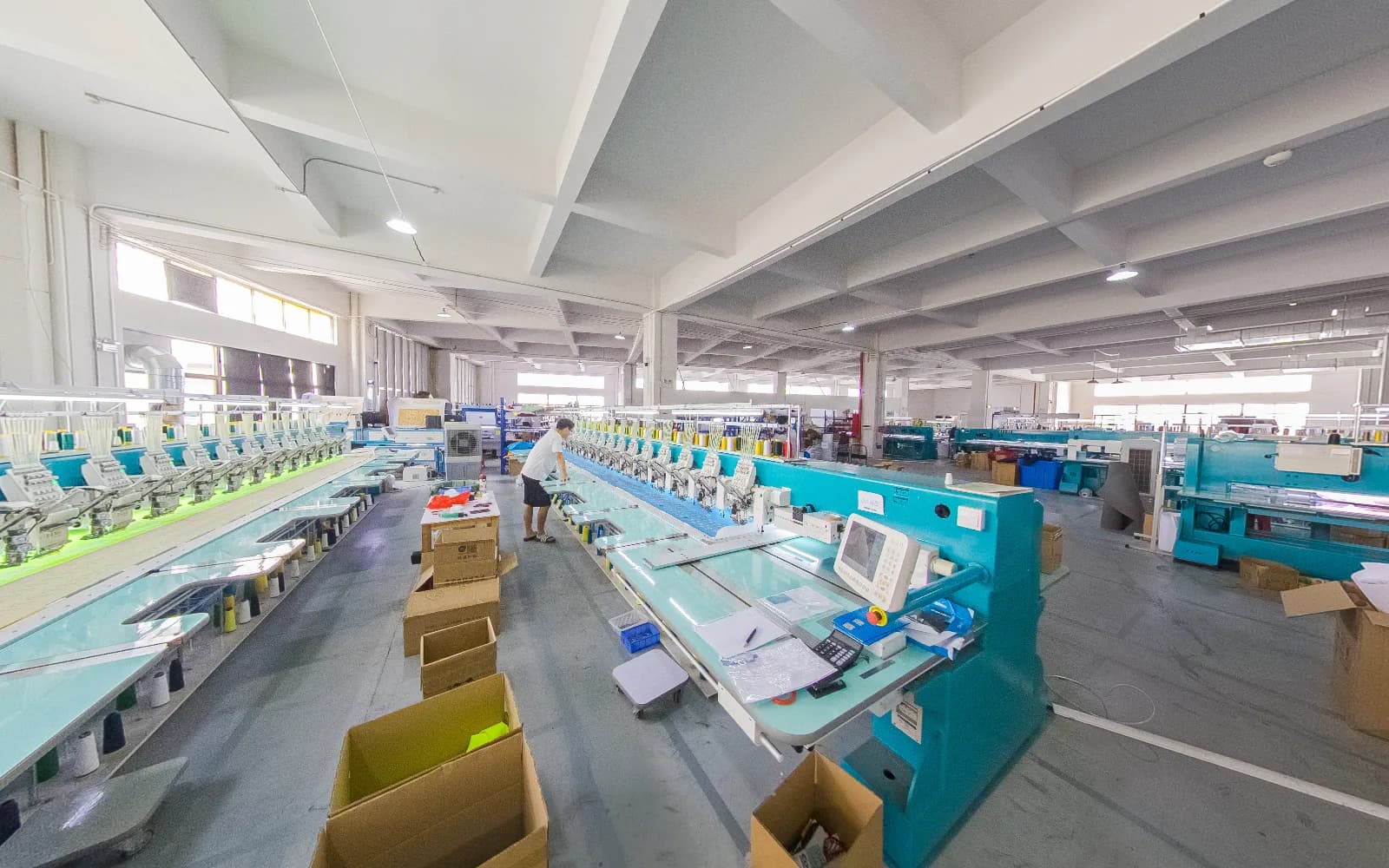
Real embroidery production floor · October 2026
01Custom development
02Material guidance
03Backing options
CHOOSE THE CONSTRUCTION BEFORE THE QUOTE
Start with the artwork at its intended size and the item it will be attached to. Embroidery, chenille, sequins and woven labels solve different design problems. Use the product pages below to compare their construction and prepare a specification.
Textured logos for jackets, uniforms, caps and bags.
Review before sampling: Stitch coverage, smallest lettering, base fabric and border shape.
Compare embroidery and woven patch construction →Raised, looped texture for varsity letters and bold garment emblems.
Review before sampling: Letter shape, raised areas, base visibility and any finer embroidered detail.
Prepare artwork at the finished size →Reflective decoration for fashion collections, accessories and merchandise.
Review before sampling: Sequin layout, supporting stitches, colour effect and garment attachment.
Plan the sample review →Brand identification for garments and accessories, including small lettering.
Review before sampling: Visible dimensions, cut size, fold position, sewing allowance and edge feel. Clothing labels are distinct from woven patches.
Prepare label artwork and dimensions →A backing preference alone does not establish suitability. Include the garment fabric, placement and whether the patch must remain fixed or be removable. Not every material or construction uses the same attachment options.
The October 2026 factory photographs show the embroidery production floor and the manual work area. Depending on the project, manual operations can include quality inspection, counting, packing, edge sewing, hole punching and buckle threading. Specify the required operations with your design; a photograph does not establish every construction’s feasibility or available capacity.
For packing, identify pieces per bag, designs or colourways per SKU, and any card, barcode or other identification requirement. Agree the inspection scope against the approved sample before shipment.
Include the product type, artwork or reference, finished width × height, quantity per design, garment or application, backing preference, packing and delivery destination. Mark anything undecided so the team can advise on the construction.
MOQ, available dimensions, sample timing and bulk timing need project-specific confirmation. They are not established by these illustrative selection notes.
Request a construction review and factory quote →WHAT THIS MEANS FOR YOUR PROJECT
Compare embroidery, chenille, sequins and woven constructions against the detail and texture your project needs.
Choose an attachment method that fits the garment, product surface and intended use before sampling begins.
Confirm artwork, size and order requirements so the production route is clear for your team and ours.
START A FACTORY-DIRECT PROJECT